All News
Cyber Valley continues to grow
Three new Independent Cyber Valley Max Planck Research Groups at MPI-IS Stuttgart

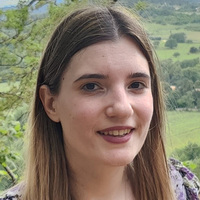
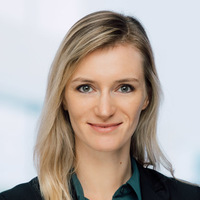
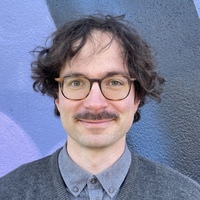
Antonia Georgopoulou, Philipp Müller, and Renate Sachse were recently appointed Cyber Valley Max Planck Research Group Leaders at the Max Planck Institute for Intelligent Systems (MPI-IS) in Stuttgart.
Antonia Georgopoulou started her Cyber Valley Max Planck Independent Research Group "Cyborg Robotics and Intelligent Sensing (CyRIS)" on October 15, 2025.
Antonia’s research focuses on bio-inspired materials and structures, additive manufacturing and functional materials for soft and biohybrid robotic applications. Her work bridges materials science, robotics, and bioengineering to create adaptable and intelligent robotic platforms. Building on her work in electronic skin and multifunctional sensors, her group aims to develop robotic systems capable of adapting to complex, real-world environments.
Antonia received her degree (M.Eng.) in Chemical Engineering with distinction from the University of Patras, Greece, in 2017. In 2019, she received her degree (M.S.) in Biomedical Engineering from ETH Zürich. She received her Ph.D. in Engineering Science at Vrije Universiteit Brussel with highest distinction in 2022 before joining the department of Advanced Materials and Surfaces at Empa, the Swiss Institute for Materials Science and Technology. In 2023, she was awarded the prestigious fellowship Women in Science (WINS) and joined the soft materials laboratory at EPFL and the NCCR Bio-Inspired Materials.
Philipp Müller started his Cyber Valley Max Planck Independent Research Group "Embodied Social Interaction" on November 1, 2025 at the MPI-IS Stuttgart.
Philipp’s current research aims to establish the foundations for the next generation of embodied AI systems that can integrate seamlessly into human social life. He develops methods for analyzing and responding to complex, multimodal human behaviors – for instance, inferring user engagement, emotional expressions, and emotion regulation. Philipp combines theories and methodologies from psychology with multimodal artificial intelligence. He also applies his methods in psychiatric contexts, supporting clinical assessment and the evaluation of patient–therapist relationships
Philipp received a Bachelor's degree in Psychology as well as Bachelor's and Master's degrees in Computer Science from Saarland University. After a research stay as a Visiting Student at Stanford University, he completed his Ph.D. at the Max Planck Institute for Informatics. He subsequently held research positions at the University of Stuttgart and most recently worked as a Senior Researcher at the German Research Center for Artificial Intelligence (DFKI) in Saarbrücken.
Renate Sachse joined the MPI-IS Stuttgart on January 1, 2026 with her Independent Cyber Valley Research Group "Mechanics for Intelligent Structures".
Renate Sachse’s research advances computational methods for designing intelligent structures that can actively shape, adapt, and respond to their environment. Her group develops high-fidelity simulation models to capture the complex, nonlinear deformation behavior of thin-walled, compliant, and soft robotic systems. A key focus is on engineering and programming nonlinear deformation patterns, as well as tailoring mechanical properties through geometry, material choice, and actuation. These methods aim to support the design of soft robotic and bioinspired structures that can achieve predictable, reliable and programmable motion.
Renate has recently been a postdoctoral researcher at the Technical University of Munich and has completed a research stay at Harvard University. She received her Ph.D. in Civil Engineering from the University of Stuttgart in 2020 and has been recognized with multiple prestigious awards, including the Bertha Benz Prize 2022, the Dr. Wilhelmy-VDI Award, and the Klaus Tschira Boost Fund Fellowship.
Company Information

Related Articles

Success stories from the Cyber Valley Innovation Campus: ...


Three start-ups join the Cyber Valley Start-up Network